
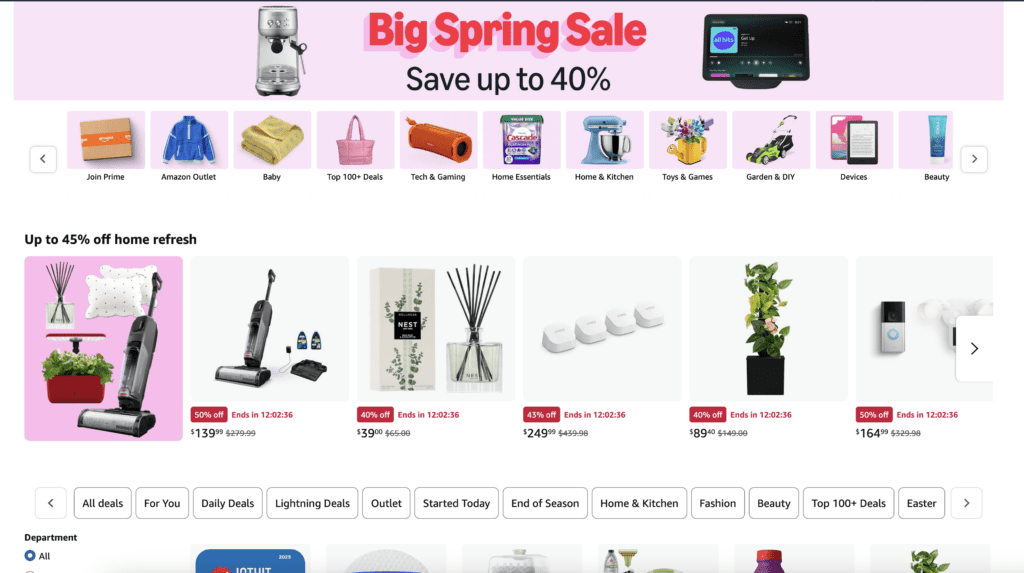
The Amazon Spring Sale runs from March 25 through March 31, and if you’re an active Amazon creator, having a real Amazon Spring Sale strategy this week matters more than just showing up and sharing links. This week is one of the most valuable data collection windows you will have before Prime Day in July
Most creators treat smaller sale events as a warm-up. Show up, share some links, see what happens. But the creators who walk into Prime Day with a real strategy are the ones who treated every sale before it as a test, and actually paid attention to what the results were telling them.
Here is how to approach this week with intention.
Share what you already know works, in new ways.
This is the most important thing we can say about any sale event, and it is also the most ignored.
When a sale rolls around, there is a temptation to sweep the floor. High ticket items are discounted, commissions look attractive, and suddenly creators who have never mentioned a product in their lives are linking it because it is on sale and the payout is appealing. Your audience notices. Maybe not consciously, but the trust erosion is real.
The Spring Sale is not the time to experiment with products outside your lane. It is the time to experiment with how you share the products already inside it. If your audience trusts you for affordable denim, find three new ways to show them affordable denim this week. A reel they haven’t seen. A storefront idea list they haven’t visited. A carousel that tells a story instead of just showing options.
Authenticity is not a buzzword. It is the foundation that makes your affiliate links convert at all. Protect it, especially during sale season when everyone else is abandoning theirs.
Use this week to test every format you’ve been curious about.
If you have been meaning to try something different but haven’t had a reason to pull the trigger, this week is your window. The increased traffic and purchase intent during a sale event means your tests will have more data behind them faster than they would during a regular week.
On the content side, consider testing formats you don’t typically use. If you primarily share static posts, try a reel. Rely heavily on stories? Test a carousel. If you usually share individual products, try building a narrative around a full outfit or a complete home refresh under a certain budget. Different formats reach different segments of your audience, and a sale week with elevated engagement is the best time to find out which ones resonate.
On the storefront side, if your Amazon storefront organization hasn’t been updated in a while, this week is a good time to test a new structure. Try a sale-specific idea list. Test a shoppable photo. Create a “most loved” list featuring only your highest converting products and see how it performs against your existing organization. Small structural changes during high traffic periods reveal a lot about how your audience actually navigates and shops.
Your Amazon Spring Sale Strategy Should Include This Metric
This is the metric most creators overlook entirely, and it is one of the most revealing data points you have access to.
A high click count with low conversion is not a minor inconvenience. It is a signal that something is breaking down between your recommendation and the purchase. Your audience was interested enough to click, but something stopped them from buying. That gap is worth understanding.
The reasons vary. It could be a pricing issue, where the product is outside what your audience is comfortable spending even on sale. Or a positioning issue, where the way you described or framed the product created an expectation the product page didn’t meet. It could be a trust issue, where the product doesn’t feel aligned with what your audience expects from you. It could even be a delivery or availability issue on Amazon’s end.
Whatever the reason, identifying that gap now and addressing it before Prime Day in July is one of the highest leverage things you can do this week. Prime Day brings significantly more traffic and purchase intent than the Spring Sale. If something is breaking down in your conversion now, it will break down at a much larger scale in July. Use this week to find it and fix it.
Track everything, even if it feels premature.
Note which products you shared and in what format. Screenshot your analytics at the end of the week. Record what your click-through rate looked like on each piece of content, what your conversion rate was by product, and which idea lists or storefront sections got the most engagement.
You do not need a complicated system for this. A simple notes document or spreadsheet with the basics is enough. The goal is to walk into Prime Day planning with real information about what your specific audience responds to, rather than making decisions based on assumptions or what you see working for other creators whose audiences may be completely different from yours.
What this week is really about.
The Spring Sale will generate revenue. That is a good thing. But the creators who will have their strongest Prime Day yet are the ones treating this week as research, not just an income event.
Show up authentically. Test intentionally. Pay attention to what the data is telling you. And go into July with a strategy built on actual evidence rather than a best guess.
If you want support building your Amazon storefront strategy or developing the kind of organic affiliate approach that converts consistently, not just during sale season, that is exactly what we do at Right Hand Gals.
[Apply to work with us and let’s build your affiliate strategy together →]


